


Question PyramidBuilder
Free • Downloadable Assets
When to Use
At the start of any generative, formative, or evaluative study to turn goals into sharp research questions.
Goal
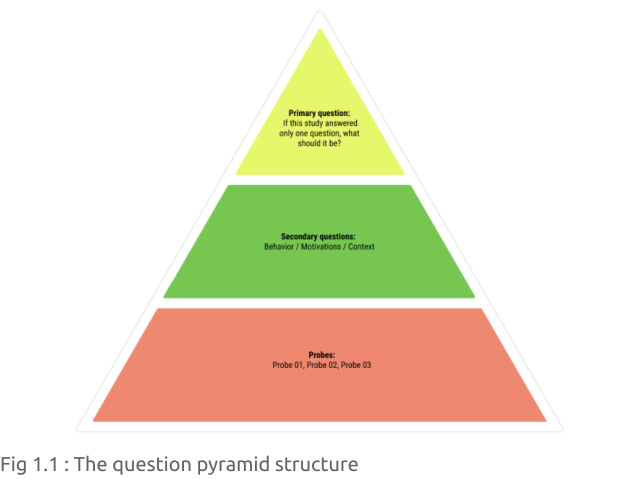
Turn vague objectives (“improve onboarding”) into a structured set of primary, secondary, and probe questions.
What you’ll need?
- Research brief or problem statement
- Stakeholder/business goals
- Space to cluster (FigJam, Miro, sticky notes)
Steps
- Define the apex question
- Ask: “If the study could answer only one question, what should it be?”
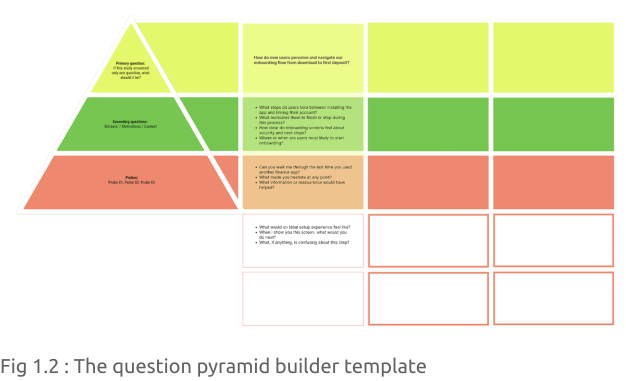
- Write 1–2 primary questions (e.g., “How do new users make sense of our onboarding flow?”).
- Generate supporting questions
- For each primary question, add secondary questions about behavior, motivations, and context (e.g., “What information do they look for first?”).
- Check each with: “What will this question tell me that helps design or product decisions?”; delete those that fail.
- Create probes and follow-ups
- For each secondary question, add 2–3 open-ended probes (“Can you walk me through a recent example?”, “What made that confusing?”).
- Mark which probes are for generative (explore needs), evaluative (test flows), or formative (improve a concept).
Outputs
- A pyramid: 1–2 primary, 5–10 secondary, and a flexible bank of probes.
- A cleaner discussion guide where every question traces back to a top-level goal.
Downloadable Assets

Related Articles
UX Design
How to use eye tracking for research

UX Design
How to use eye tracking for research
UX Design
How to use eye tracking for research